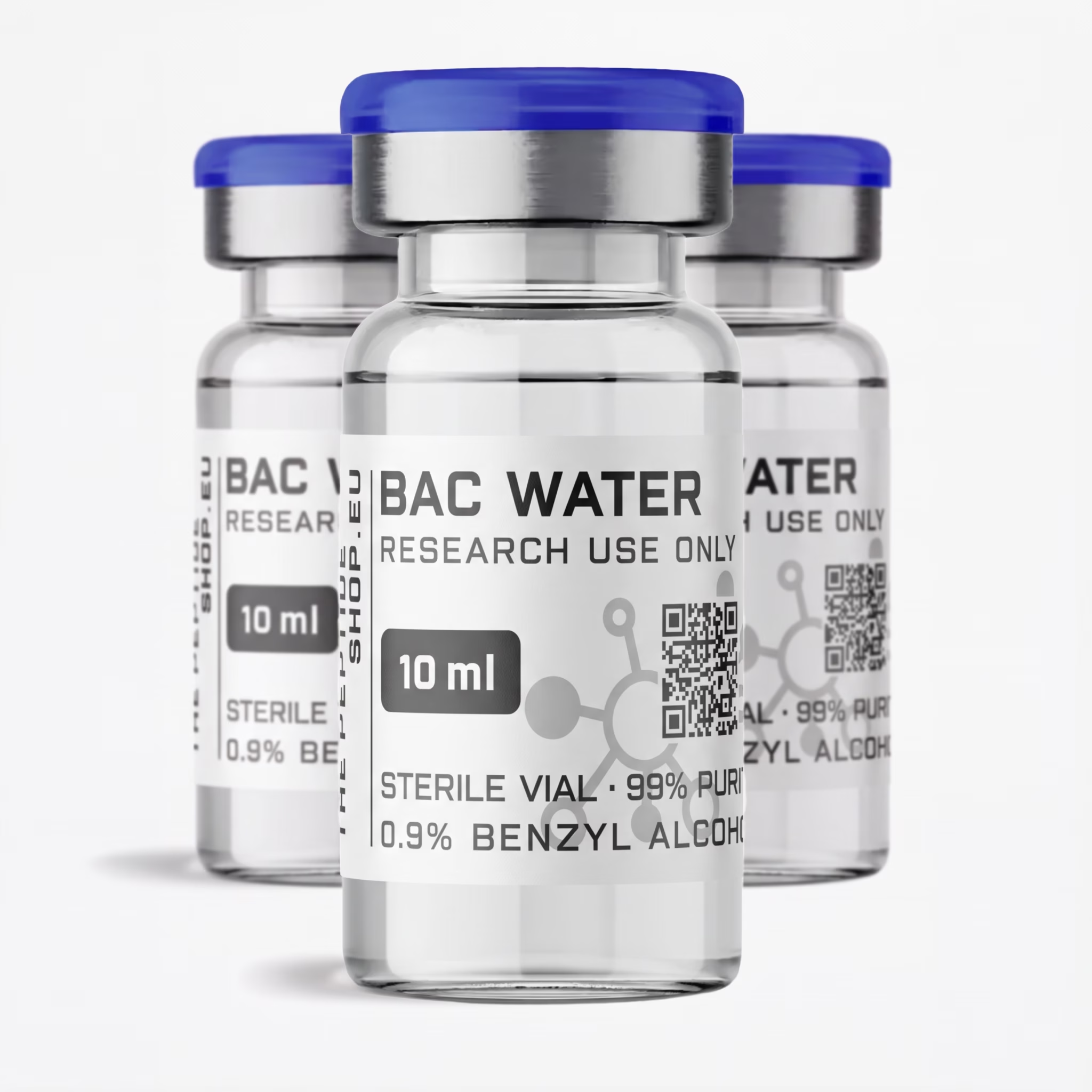
BAC Water in Europe in a Three-Vial Pack
Buy BAC Water in Europe from The Peptide Shop in a pack of three separate 10 ml vials. The pack provides a stated total volume of 30 ml and lets your laboratory purchase several units together. Each vial remains a separate container, making the format useful when your purchasing plan calls for more than one unit.
Before ordering, check the product details against your laboratory method. The right quantity depends on your planned work, while suitability depends on the formulation and the materials involved. We supply this product exclusively for laboratory research, not for human or veterinary use.
Three 10 ml Vials in One Pack
This product contains three individual BAC Water vials, each with a stated liquid volume of 10 ml. You receive 30 ml across three containers rather than one container holding 30 ml. This distinction helps you compare pack sizes and plan how your laboratory will manage its stock.
If you only need one vial, choose our single-vial bacteriostatic water option. Alternatively, browse the BAC water category to compare both formats. Neither pack size guarantees a particular number of preparations, since each method requires its own volumes, controls and handling procedures.
Choosing the Right Quantity
Start with the amount your laboratory expects to need, including any controls or repeat work. Then consider whether one container or several separate containers better fits your workflow. Buying three vials gives you more units, but it does not change the requirements for handling each one.
Also check the expiry information before planning long-term stock. A larger purchase does not extend the shelf life of the product or create a longer period of use after opening. Follow the instructions that apply to each supplied vial.
What Is BAC Water?
BAC water is a common name for bacteriostatic water. It contains a preservative intended to inhibit bacterial growth. However, the name alone does not tell you the exact ingredients, their concentrations or every quality feature of the preparation.
For this reason, read the product specifications before selecting it for research. Another manufacturer’s label cannot confirm this product’s formulation. Likewise, the stated 10 ml volume tells you how much liquid each vial contains, not the concentration of its preservative.
Bacteriostatic Does Not Mean Sterile
Bacterial growth inhibition and sterility describe different properties. A preservative does not prove that a batch meets a sterility specification, nor does it make contaminated material suitable for use. Clear appearance also cannot confirm the absence of microorganisms.
If your method requires sterility or endotoxin testing, look for evidence that covers those requirements directly. Treat each result according to what the laboratory measured rather than assume that one quality claim covers everything.
Check Compatibility Before Use
Before choosing BAC Water in Europe for your laboratory, compare its formulation with the requirements of your method. Some workflows need a specific solvent, buffer or preservative-free preparation. BAC Water should only serve as a diluent when its documented properties meet those needs.
The same applies to peptide research. A preparation that suits one compound may not suit another, and different methods can require different conditions for the same compound. Our research peptide collection provides individual product information, but listing peptides and BAC Water together does not establish compatibility.
Reconstitution and Dilution
Reconstitution generally means preparing a solution from a dry material. Dilution means reducing the concentration of an existing solution by adding a suitable liquid. Although both processes may involve a diluent, they answer different laboratory needs.
Follow the method and material specifications when choosing a preparation. In addition, consider all ingredients when planning controls, since a preservative becomes part of the experimental system. Do not replace a specified vehicle with BAC Water without assessing the change.
Product Details and Certificates of Analysis
Review the available product information before purchasing the three-vial pack. Useful details include the formulation, stated volume, batch reference and results of any relevant tests. Our COA database provides access to the available Certificates of Analysis.
Each report covers a defined set of tests, so read the methods and results carefully. A result for one property does not automatically confirm sterility, endotoxin levels or every other feature your work might require. If an essential detail remains unclear, ask for clarification before proceeding.
Keep Track of Each Vial
Check the batch details on the supplied containers and match them with the relevant documents. Do not assume that every vial shares a batch reference unless the information confirms it. Keeping these details with your laboratory records helps you trace which material you used.
Where your procedures require it, record access dates and relevant handling events for each container. This gives you a clearer history than treating all three vials as one item. It can also help when reviewing differences between preparations.
Storage and Laboratory Handling
Follow the storage and handling instructions for this specific product, including expiry details and any restrictions after access. A preservative does not allow unlimited repeat access or replace appropriate laboratory procedures. Therefore, use only the periods and conditions that the product documentation supports.
Also keep the original water preparation separate from any later research solution in your records. Adding another material creates a different preparation, which may have different storage and stability needs. Guidance for the original vial does not automatically establish how long that new solution remains suitable.
Buy BAC Water in Europe for Research Only
Choose this three-vial pack when three separate 10 ml units match your laboratory’s needs. Review the formulation first, confirm compatibility with your method and then select the quantity that fits your purchasing plan.
The Peptide Shop accepts orders only from qualified researchers purchasing on behalf of qualified research laboratories. Read our research-use-only policy before ordering. All products are exclusively for laboratory research, not for human consumption, injection, veterinary use or diagnostic or therapeutic applications.