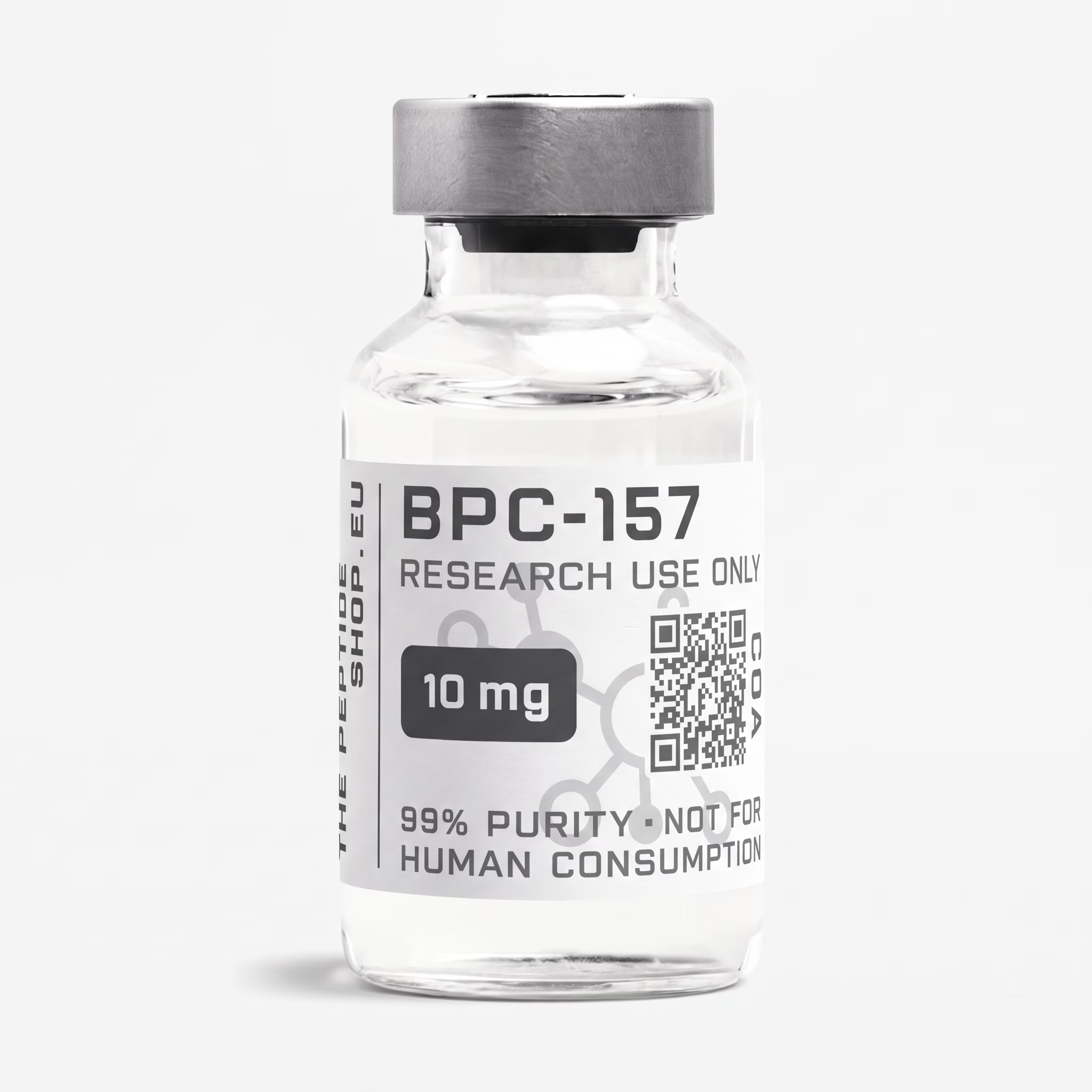
BPC 157 Peptide 10 mg for Laboratory Research
BPC 157 peptide 10 mg is a synthetic research material containing 15 amino acids. Its scientific background includes studies of tendon-derived cells, cell movement and signalling pathways. Researchers also use the name Body Protection Compound-157 when discussing this compound.
This product carries a stated quantity of 10 mg. Before choosing it for laboratory work, compare the specifications and analytical reports with the needs of your research method. The Peptide Shop supplies this material exclusively for laboratory research, not for human consumption, veterinary use, diagnosis or treatment.
What Is BPC 157 Peptide?
BPC-157 belongs to a group called pentadecapeptides, meaning peptides with 15 amino-acid residues. Scientific publications commonly describe its sequence as GEPPPGKPADDAGLV. These letters represent the amino acids in their specific order.
However, the sequence alone does not describe every feature of a supplied preparation. Formulation, counterions and the basis of the stated quantity also matter. Therefore, review the product specifications alongside any research paper that guides your work.
Understanding the BPC-157 Name
You may encounter both “BPC-157” and “BPC 157” in research publications. Both forms can help when searching for relevant studies. The words “Body Protection Compound” form part of the name, rather than a guarantee of protection against injury, disease or cell damage.
For this reason, separate naming conventions from experimental evidence. A product description can introduce the compound, but it cannot establish an outcome. Our peptide research blog explains common terms and offers further guidance on assessing research materials.
Why Product Identity Matters
A familiar name does not independently verify the material in a vial. Check the available identity testing and confirm that the documented compound matches your laboratory method. Also review the formulation when comparing products from different sources.
Two listings may use the same name without providing the same specifications or analytical evidence. Consequently, assess the supporting information rather than rely on the label alone.
BPC-157 in Tendon Cell Research
Published studies have examined BPC-157 through cultured cells, tendon explants and animal models. Each approach explores a different question. Together, they contribute to the compound’s research background, but they do not establish a clinical benefit or verify this product.
When reviewing a study, first identify the material and model. Then examine the controls and measured outcomes. This helps you judge whether the work relates to your planned experiment.
Cell Migration and Spreading
A study in the Journal of Applied Physiology examined fibroblasts from rat Achilles tendons. The researchers reported increased migration and spreading in the tested cultures after exposure to BPC-157. They also investigated outgrowth from tendon explants and cell survival under oxidative stress.
These findings concern specific measurements under defined conditions. Therefore, they should not become a broad promise of “recovery.” Read the original methods to understand what the researchers measured and how they compared the results.
FAK and Paxillin Signalling
The same investigation examined focal adhesion kinase, known as FAK, and a protein called paxillin. The authors reported increased phosphorylation, a chemical change involved in protein signalling, without an increase in the total amounts of those proteins.
This distinction matters because activation and abundance describe different properties. Likewise, the study did not find a direct increase in cultured tendon fibroblast proliferation under the tested conditions. Increased movement does not automatically mean increased cell growth.
Other Areas of BPC 157 Peptide Research
The literature also includes studies of endothelial cells, which line blood vessels, and changes in receptor expression. These investigations explore possible mechanisms in defined models. However, they do not demonstrate the same responses in every tissue or research setting.
Before drawing links between publications, compare their methods and outcomes. Differences in cell type, exposure period and experimental conditions can affect how you interpret the findings.
Vascular Signalling Models
One study examined BPC-157 using endothelial cell assays and preclinical vascular models. The authors reported findings involving vascular endothelial growth factor receptor 2, commonly called VEGFR2. Their work also explored the Akt-eNOS signalling pathway.
These results describe particular experimental systems. They do not establish improved circulation in people, nor do they confirm the performance of a separately supplied batch. Keep the original model and study material central to your assessment.
Growth Hormone Receptor Research
Another investigation examined growth hormone receptor expression in rat tendon fibroblasts. The authors reported increased receptor expression and studied how the cells then responded to growth hormone. This work contributes to research into cellular responses.
However, BPC-157 is not growth hormone. A change in receptor expression within cultured cells does not establish higher circulating hormone levels or an effect in a person. Avoid treating these separate questions as equivalent.
What Does BPC-157 10 mg Mean?
The 10 mg designation identifies the stated product quantity. It does not independently establish purity, concentration or biological activity. Each of these characteristics requires its own definition and supporting evidence where relevant.
Also distinguish mass from concentration. Milligrams describe an amount of material, while concentration relates an amount to a volume. Consequently, the product name alone cannot define the concentration of a prepared solution.
The quantity does not provide a dose, administration schedule or treatment course. Laboratory requirements should follow an appropriate research method. Check how the supplier defines the stated amount before using it in calculations.
Review the BPC 157 Peptide COA
A Certificate of Analysis reports the results of specific tests on a sample. Visit our COA database to review the available product reports. Start with the sample or batch reference, then examine the methods, units and results.
A report has a defined scope. Its presence does not establish every quality characteristic, and a report for another batch cannot verify the material you receive. Request clarification whenever an essential detail remains unclear.
Identity, Purity and Content
Identity testing assesses whether a sample matches the expected compound. Purity testing examines sample components through a defined method, while content testing provides a separate measurement. Therefore, one result does not automatically confirm the others.
A purity percentage alone also does not establish sterility or endotoxin levels. If your application requires these characteristics, look for evidence that addresses them directly. Our guide to reading a peptide COA explains how to interpret these different measurements.
Keep the Batch Documentation
Retain the relevant specifications and reports with your laboratory records. Match their references with the supplied material where possible, and record which batch each experiment uses. These details support traceability and comparisons between preparations.
Scientific publications serve a different purpose from batch documentation. Papers explain research methods and findings, while analytical reports provide evidence about tested samples. Use both sources according to their actual scope.
Laboratory Preparation, Handling and Storage
Follow the handling and storage instructions for this specific product and formulation. Do not transfer a temperature range or stability period from another peptide without suitable evidence. Dry material and prepared solutions may also require different conditions.
If your method needs an aqueous diluent, assess compatibility before selecting one. Our BAC water category offers separate purchasing options, but listing both materials does not establish suitability for the same workflow. Compare the documented formulation with your method’s requirements.
BPC 157 Peptide for Research Use Only
Choose this product only when its documented characteristics meet your laboratory requirements. Review the specifications, read the relevant literature and retain the supporting reports. A product description provides an introduction rather than a complete experimental protocol.
The Peptide Shop accepts orders only from qualified researchers purchasing on behalf of qualified research laboratories. Read our research-use-only policy before ordering. This product is not for personal supplementation, human or veterinary use, diagnosis or treatment.