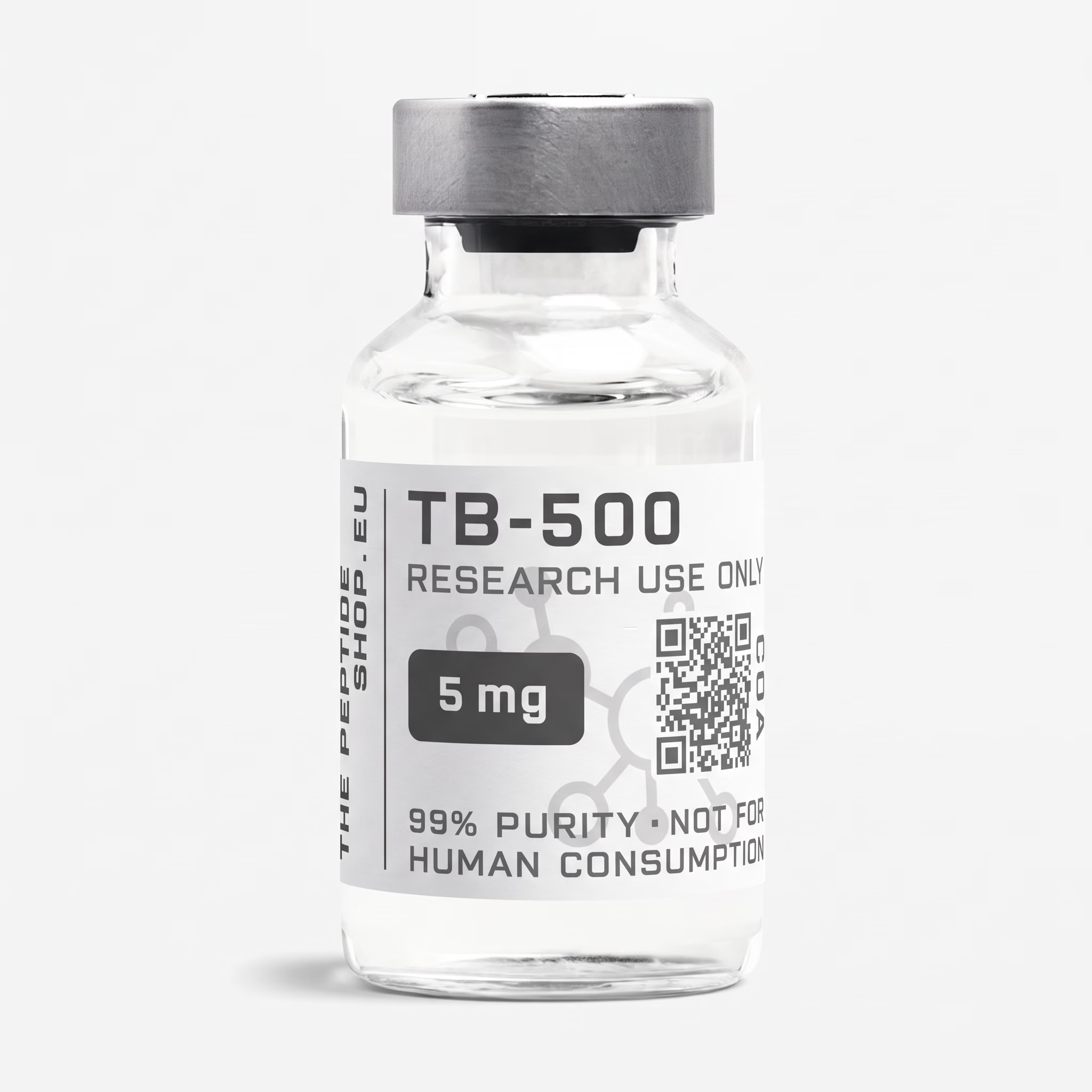
TB-500 Peptide 5 mg for Laboratory Research
TB-500 peptide 5 mg is a research material linked to studies of thymosin beta-4 and its active peptide regions. Researchers have explored these materials in models of cell movement, tissue repair and the network surrounding cells. The exact compound matters, so always match the supplied material with the requirements of your laboratory method.
This product has a stated quantity of 5 mg. Review its specifications and analytical reports before deciding whether it suits your work. The Peptide Shop supplies all products exclusively for laboratory research, not for human consumption, veterinary use, diagnosis or treatment.
What Is TB-500 Peptide?
TB-500 is a name associated with synthetic peptide material related to thymosin beta-4. An analytical study identified the acetylated fragment Ac-LKKTETQ in a product labelled TB-500. However, this finding does not confirm the composition of every product carrying that name.
Product identity therefore requires more than a familiar label. Check the sequence, relevant chemical changes and supporting test results before selecting scientific references. Our peptide research blog explains common terms and offers guidance on reviewing product information.
TB-500 and Thymosin Beta-4
Thymosin beta-4 contains 43 amino acids. Researchers have also studied shorter regions of its sequence, including the seven-amino-acid region LKKTETQ. This work helps explain the connection between TB-500 terminology and thymosin beta-4 literature.
Nevertheless, a shorter fragment differs from the complete molecule. Sharing part of a sequence does not establish that two materials behave identically. Before comparing studies, confirm which compound each paper describes and whether it matches your research material.
Understanding the Research Background
Studies involving thymosin beta-4 and related regions cover several areas of cell biology. Their findings help researchers explore specific questions, but they do not guarantee the performance of a separately supplied product. The study material, model and conditions all shape the result.
Start by identifying what the researchers tested. Then look at the comparison groups, measured outcomes and limits of the work. A finding from cultured cells, for example, does not establish the same response in an animal or a person.
Actin and Cell Movement
Actin forms part of a cell’s internal framework. Scientists have studied full-length thymosin beta-4 in connection with actin and have examined its central actin-binding region. This relationship forms part of the scientific background behind related peptide fragments.
However, the term “actin-binding region” does not describe every property of an isolated fragment. Read the original methods to understand the material and conditions involved. This provides a stronger basis for comparison than a general claim about cell movement.
Tissue and Blood Vessel Models
Published research includes cell-migration assays, vessel-sprouting models and animal studies of tissue repair. Other work has examined enzymes involved in changes to the extracellular matrix, the network of material surrounding cells.
These studies measure different processes. Therefore, a change in cell movement or enzyme activity should not become a broad promise about healing. Review the actual outcome and keep it separate from claims about circulation, recovery or clinical benefit.
What Does the 5 mg Quantity Tell You?
The 5 mg designation identifies the stated product quantity. It does not independently establish purity, concentration, sequence or biological activity. Those characteristics require separate information and appropriate evidence.
Mass and concentration also answer different questions. Milligrams describe an amount, while concentration relates an amount to a volume. As a result, the product name cannot define the concentration of a prepared solution.
Research Planning, Not Personal Dosing
The quantity does not describe a single dose, weekly schedule or treatment course. The Peptide Shop does not provide administration instructions or recommend personal use. Instead, laboratory planning should follow an appropriate research method.
Check how the supplier defines the stated amount before using it in calculations. Also consider the formulation and any content measurements relevant to your work. If an essential detail remains unclear, request clarification before proceeding.
Review the TB-500 Peptide COA
A Certificate of Analysis provides results for the tests that a laboratory performed on a sample. Visit our COA database to review the available product reports. First, check the sample or batch reference, then examine the methods and results.
A report has a defined scope. It may address identity, purity or other characteristics without covering every requirement of your application. Likewise, a certificate for another batch cannot establish the properties of the material you receive.
Identity, Purity and Content
Identity testing assesses whether a sample matches the expected compound. Purity testing examines sample components through a particular method, while content testing provides a separate measurement. These results complement one another, but none automatically replaces the others.
A purity percentage alone does not establish sterility or endotoxin levels. If your method requires either characteristic, look for relevant evidence. Our guide to reading a peptide COA explains how to assess the figures and limits within a report.
Handling, Preparation and Storage
Follow the handling and storage instructions for this specific product and formulation. Do not borrow a temperature range or stability period from another peptide without suitable supporting information. Dry materials and prepared solutions may also need different conditions.
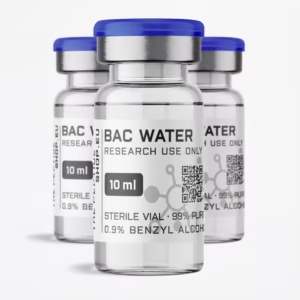
If your method requires a diluent, check compatibility before selecting one. Our BAC water category offers separate purchasing options, but their availability does not establish suitability for TB-500. The compound’s specifications and your laboratory method should guide that choice.
Keep records of receipt, batch identification and relevant handling events. Retain the supporting reports alongside those records so you can trace the material used in each experiment. This also helps when reviewing differences between batches or preparations.
Choose TB-500 Peptide for Qualified Laboratory Research
Assess the product specifications, analytical evidence and relevant literature together before ordering. Each source answers different questions, so use them to build a clear picture of the material and its suitability for your work.
The Peptide Shop accepts orders only from qualified researchers purchasing on behalf of qualified research laboratories. Read our research-use-only policy for the purchasing restrictions. All use must remain within legitimate laboratory research.