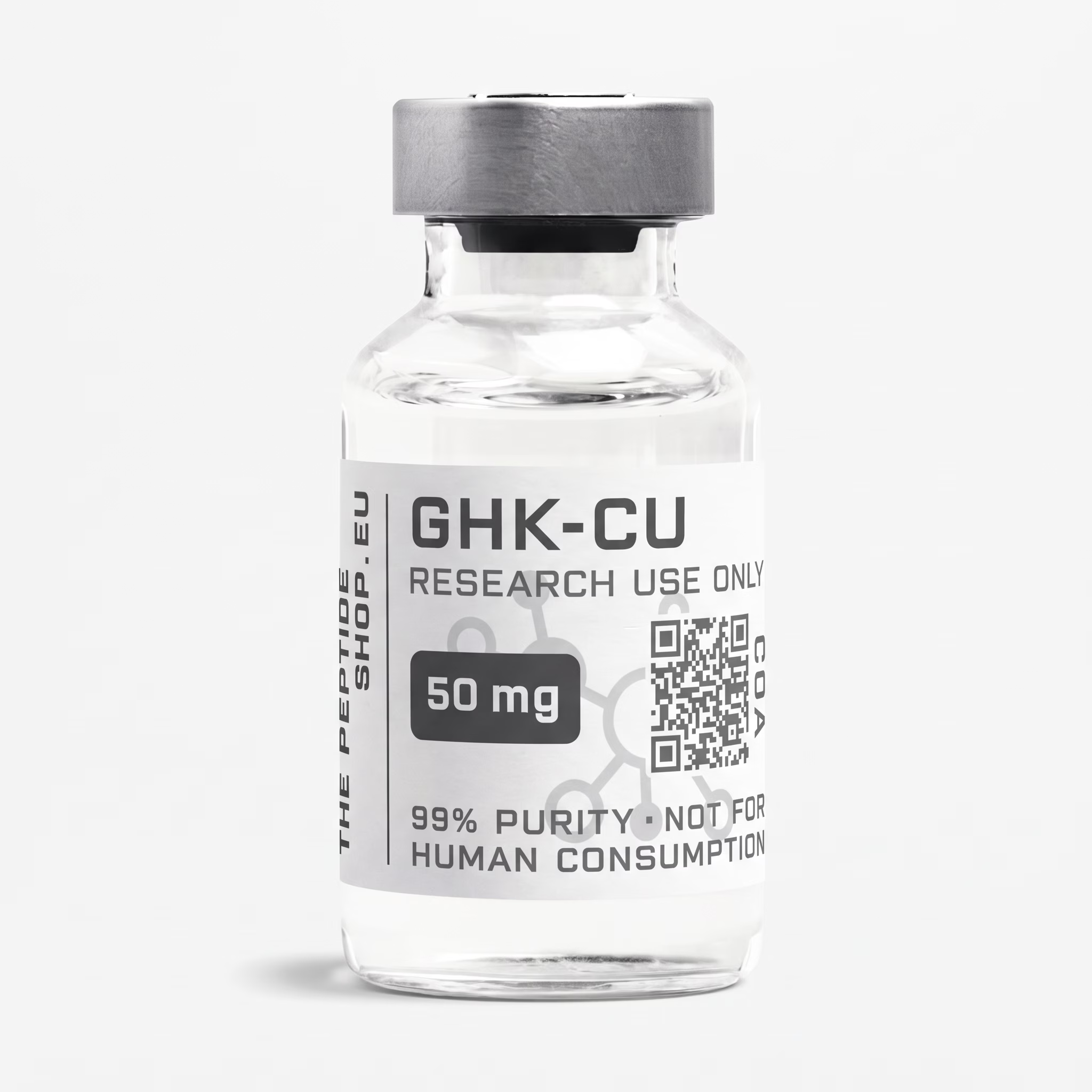
GHK-Cu Peptide 50 mg for Laboratory Research
GHK-Cu peptide 50 mg is a copper-peptide complex with a research background in cell biology, collagen production and peptide-metal interactions. Its name brings together GHK, a peptide containing three amino acids, and Cu, the chemical symbol for copper. Researchers study both its chemical structure and its responses in defined experimental models.
This product carries a stated quantity of 50 mg. Before selecting it for laboratory work, compare the specifications and analytical reports with the needs of your method. The Peptide Shop supplies this material exclusively for laboratory research, not for human consumption, veterinary use, diagnosis or treatment.
What Is GHK-Cu Peptide?
GHK stands for glycyl-L-histidyl-L-lysine. These three amino acids form a tripeptide that binds copper(II) ions. GHK-Cu refers to the complex that results from this interaction, rather than the peptide without copper.
This distinction matters when reading research papers or comparing products. A study involving GHK alone does not automatically describe GHK-Cu. Likewise, findings about a copper salt cannot replace evidence concerning the copper-peptide complex.
Understanding Copper-Peptide Chemistry
Copper binding forms part of GHK-Cu’s chemical identity. Structural studies have examined how copper interacts with the peptide through methods such as X-ray crystallography and spectroscopy. These methods help researchers investigate the arrangement and behaviour of the complex.
For laboratory planning, check how the supplier defines the material’s composition. Then compare that definition with the compound described in your chosen research method. A familiar product name alone cannot confirm that two preparations have the same characteristics.
GHK-Cu and Other Copper Peptides
“Copper peptide” is a broad term, while GHK-Cu identifies a particular complex. Therefore, use the full compound name when searching scientific literature or reviewing product specifications. Similar descriptions do not establish identical composition or suitability.
Our peptide research blog explains common terms and analytical documentation. Use these guides as an introduction, then read the original publications for the methods and limitations relevant to your work.
The Research Background of GHK-Cu
Published GHK-Cu research includes studies involving fibroblasts, which are cells involved in producing and maintaining connective tissue. Other work examines components of the extracellular matrix, the network of material surrounding cells. These studies explore specific biological questions under defined conditions.
However, an observation in cultured cells or an animal model does not establish an effect in people. It also does not verify a separately supplied research product. Always distinguish the background of the compound from evidence about the batch you intend to use.
Collagen Production in Cell Cultures
A study published in FEBS Letters examined GHK-Cu in fibroblast cultures and reported increased collagen synthesis under the tested conditions. The researchers separated this response from changes in cell number. This work helps explain why GHK-Cu appears in discussions of collagen-related research.
Nevertheless, the result belongs to that experimental model. Before using it to support your own work, review the cell type, exposure conditions and measurement method. A general description of “collagen support” cannot replace those details.
Components of the Extracellular Matrix
Another fibroblast study examined glycosaminoglycans, a group of molecules associated with the extracellular matrix. The authors reported changes in the production of particular substances rather than a uniform response across every component. For example, they did not report an effect on hyaluronic acid synthesis.
This distinction shows why individual measurements matter. A finding concerning one matrix component should not become a claim about every aspect of tissue structure. Instead, identify the exact outcome and assess its relevance to your model.
Matrix Turnover and Cell Responses
Research published in Life Sciences examined matrix metalloproteinase-2, also known as MMP-2, alongside proteins that help regulate these enzymes. The findings connect GHK-Cu research with matrix turnover as well as production. Both processes contribute to the broader study of the material surrounding cells.
However, a single marker cannot describe the complete behaviour of tissue. Compare the methods and results before drawing connections between studies. Differences in cell type, timing and test conditions can affect interpretation.
What Does GHK-Cu 50 mg Mean?
The 50 mg designation identifies the stated product quantity. It does not independently establish purity, copper content, concentration or biological activity. Each of these properties requires its own definition and, where relevant, supporting test results.
For a copper-peptide complex, also check what the declared mass represents. Do not assume that it refers only to the peptide component or only to elemental copper. The product specifications should explain the measurement basis relevant to your calculations.
Quantity Is Different from Concentration
Milligrams describe an amount of material, while concentration relates an amount to a volume. Consequently, the product label alone cannot define a solution concentration. It also does not establish how much material a particular assay requires.
The 50 mg quantity is not a dosing recommendation or treatment schedule. Laboratory requirements should follow an appropriate research method. If an essential specification remains unclear, request clarification before proceeding.
Review the GHK-Cu Peptide COA
A Certificate of Analysis provides results for the tests that a laboratory performed on a sample. Visit our COA database to review the available product reports. Start with the sample or batch reference, then examine the methods, units and reported findings.
Each report has a defined scope. A certificate may address identity or purity without covering every requirement of your application. Likewise, a report for another batch cannot verify the material you receive.
Identity, Purity and Copper Content
Identity testing assesses whether a sample matches the expected compound. Purity testing describes the material according to a particular analytical method. However, neither result automatically confirms copper content, sterility, endotoxin levels or the exact quantity of the target material.
Review these characteristics separately when your method requires them. Our guide to reading a peptide COA explains why analytical measurements answer different questions. Use the report’s definitions rather than treat one percentage as a complete quality assessment.
Keep Batch Records
Match the analytical report with the supplied material where the references allow it. Also retain the product specifications and relevant correspondence with your laboratory records. This helps connect each experiment with the material used.
If you compare work across batches, those records become particularly useful. They help you review differences without relying on the product name or appearance alone.
Laboratory Preparation, Handling and Storage
Follow the handling and storage instructions for this specific product and formulation. Do not transfer a temperature range or stability period from another peptide without suitable evidence. Dry material and prepared solutions may also require different conditions.
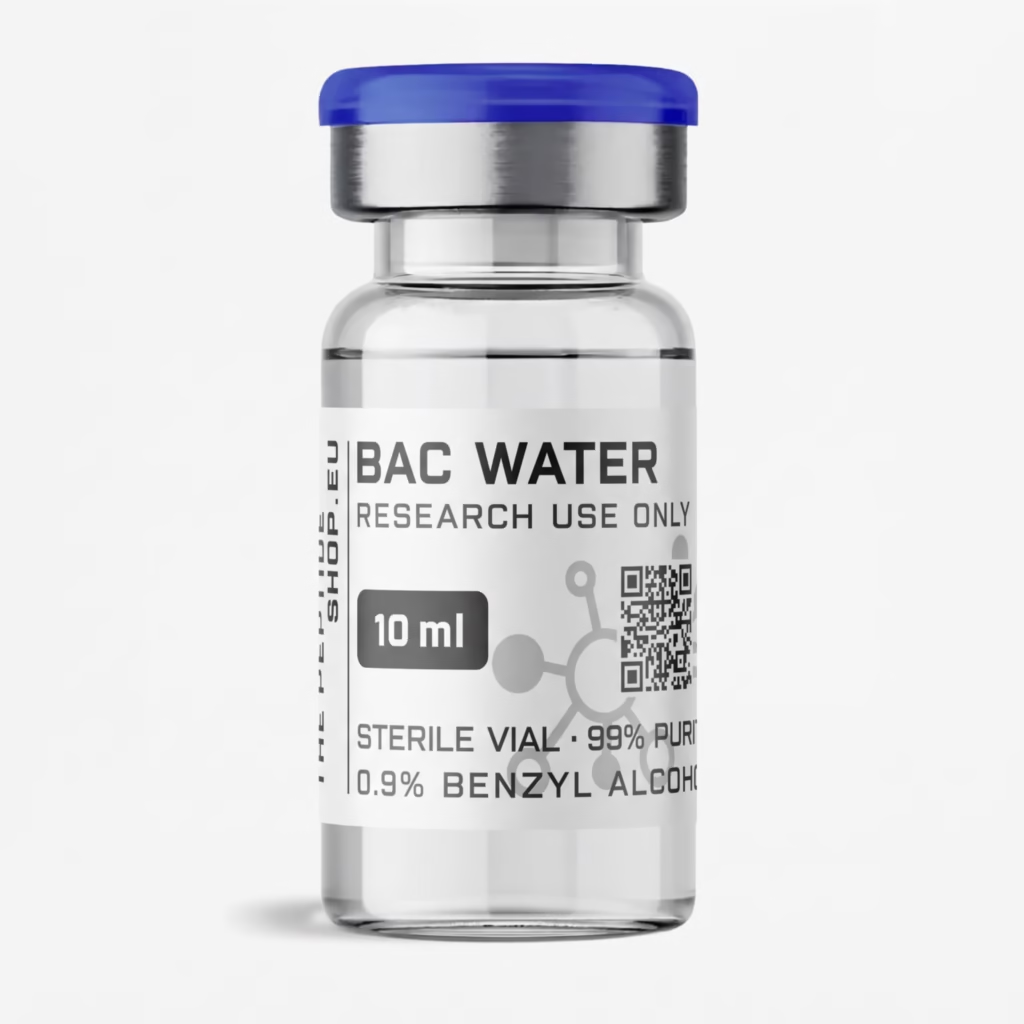
If your method needs an aqueous diluent, assess compatibility before selecting one. Our BAC water category provides separate purchasing options, but their availability does not establish suitability for GHK-Cu. Compare the documented formulation with your method’s requirements.
GHK-Cu Peptide for Research Use Only
Choose this product only when its specifications and supporting evidence meet your laboratory requirements. Assess the scientific literature for research context and the batch documentation for information about the supplied material. Neither source replaces the other.
The Peptide Shop accepts orders only from qualified researchers purchasing on behalf of qualified research laboratories. Read our research-use-only policy before ordering. This product is not a finished cosmetic, dietary supplement or material for personal or veterinary use.